
Evidence, professional reasoning, and how educators can respond to the consultation
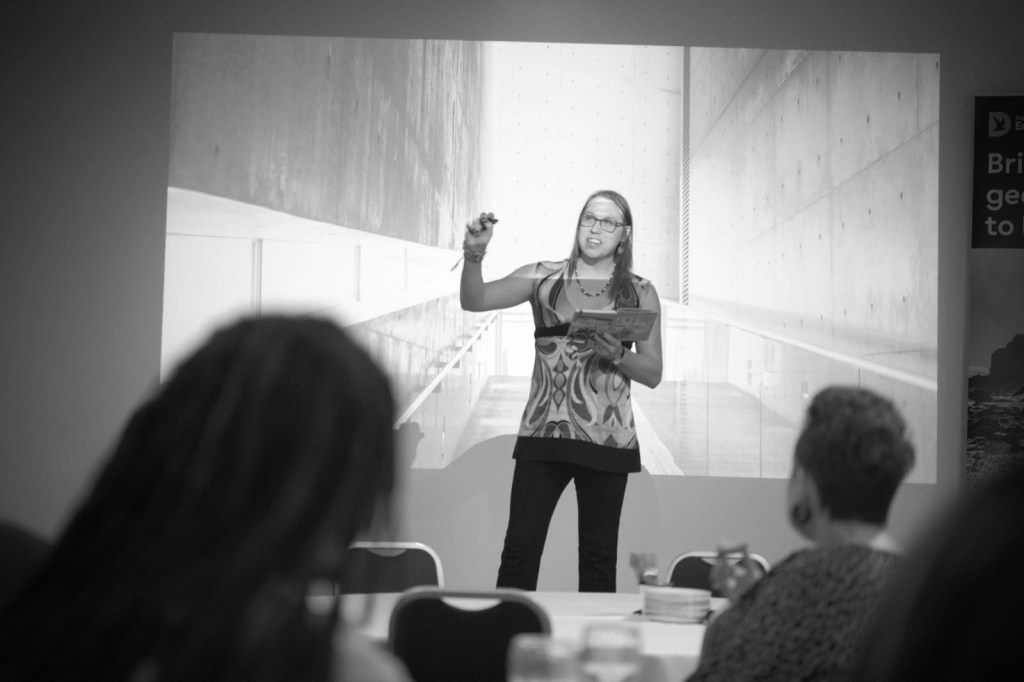
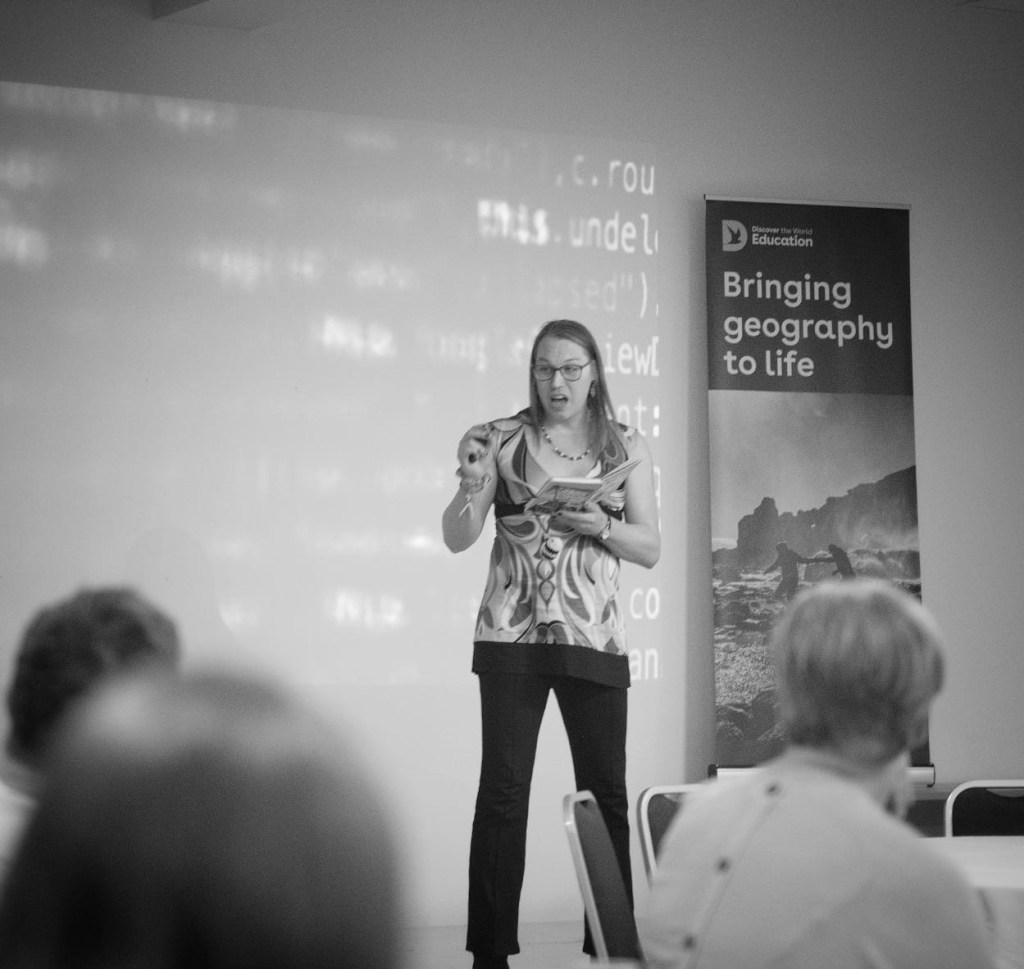
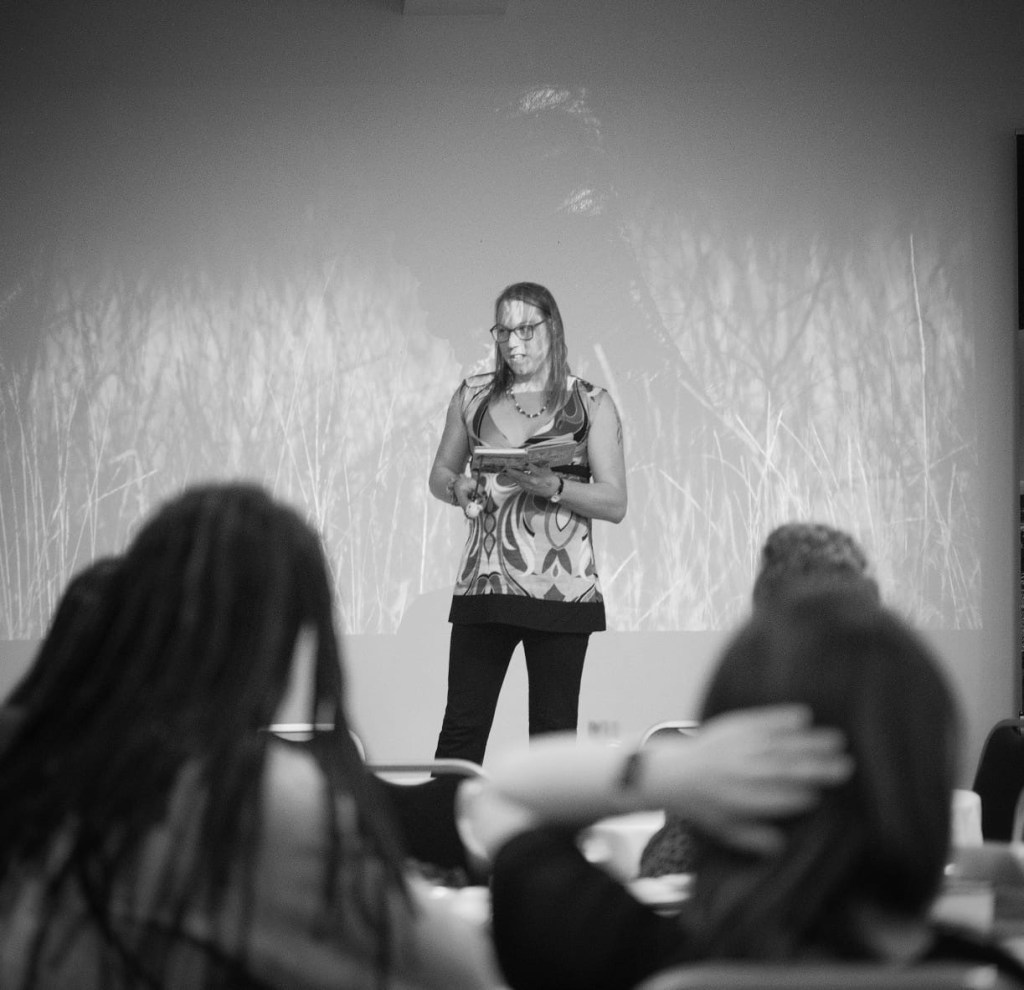
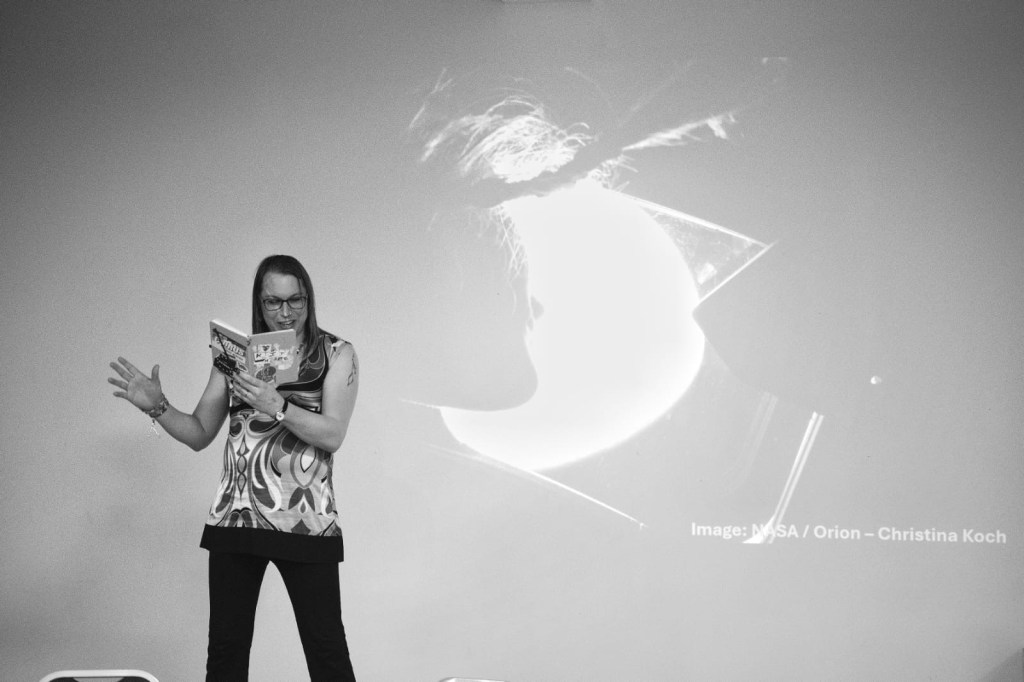
A poetry piece with imagery to raise awareness of the absence of climate change in the government’s proposed updates to Keeping Children Safe in Education (KCSIE). Playing on how the acroymn sounds like the name ‘Casey’. Performed at the Geographical Association 2026 Conference Teachmeet in Sheffield, sponsored by Discover The World Education.
Watch the performance below, absorb the words, read the rationale, and respond to the govenment consultation before 22nd April 2026. And if that deadline has passed, whatever comes of the consultation, we must all pledge to ensure our safeguarding policies are ‘climate literate’.
This blog article is a narrative version containing recommended consultation responses. If instead you just want to jump straight to a guide on how to respond, you can find one here from a previous post I wrote. 👈
Please work the algorithm and amplify the recording by popping over to YouTube, liking the video and leaving a positive comment!
Casey Cannot See

Casey is important.
Casey is known.Casey advises thousands
across the country.But Casey is old,
outdated and increasingly out of step.Casey can’t see the future — and yet
it demands we consider futures.
Possibility.Casey, a guiding light —
and yet fading, batteries waning,
in a fog of rapid progress.
Casey is an important, known advisor but rapid chances and nuance means it is failing on it’s own advice on foreseeability.
Our education settings and establishments, like society as a whole, is experiencing rapid upheavel and change. Schools are no longer responding to one big change at a time, but to stacked, interacting transformations: digitisation of social interaction, AI, falling and diversifying youth population (depending on where), mental health and well-being crises, amongst others. Many of those – whether foreseen or unforeseen – mean important statutory policies like KCSIE race to keep up.
Child safeguarding as something that schools must be responsible for was first conceved from the 2003 Every Child Matters initiative and the Children Act 2004. It wasn’t until 2014 that it was official known as KCSIE, formally replacing earlier education safeguarding guidance. Since then, yearly refinements and updates have included the likes of Prevent, online and peer-to-peer abuse, contextual safeguarding, attendance, misinformation and AI. The current iteration of KCSIE was published in September 2025.
These regular refinements and updates are totally necessary, and the bear minimum. However, to a large extent, KCSIE has evolved reactively despite itself mandating ‘foresight’ approaches to preventing harm – high‑profile failures, court judgments and inquiries, moral panics and media pressure and technological uptake after widespread use rather than being driven by anticipatory research, horizon scanning, or robust futures‑based evidence. Where KCSIE appears “proactive” is usually late‑stage responsiveness, once harms are already visible at scale.

Casey is big on context,
but context becomes the fog
through which Casey cannot see.So Casey turns to you and me,
asking us to review the latest declarations,
to march together,
in institutional step.But Casey cannot see far enough
through the fog to see
whose drumbeat we march to.There is at least one thing
that leads Casey astray —
confusing tainted echoes of rhythm,
a binary rhythm that throws doubt
on identity.“Questioning?”
Casey cannot see that the echo
is really a whistle,
calling hounds.
Casey is an authority to which we are legally bound, but not everything that informs Casey is authortative and can be harmful.
While the main framing of my poem is about climate change, this section of the poem is a little awareness-raising on my part. Educators and carers of children must abide by the framework and guidence set out in KCSIE, which is why I’m deeply concerned that the proposed changes regarding gender non-conforming and trans children is based on the discredited Cass Review.
I wanted this part of the poem to reflect how the Cass Review’s language amplifies fear under the guise of prudence, and how that fear, once embedded in safeguarding frameworks, can mobilise institutional responses that harm the very children they claim to protect. It’s my attempt of an ethical argument: when safeguarding is built on a review whose language is biased toward doubt and deficit, that bias does not remain abstract. It becomes practice.
If you would like further information and guidence how to respond to the part of the consultation on “gender questioning” pupils, you can find it here.
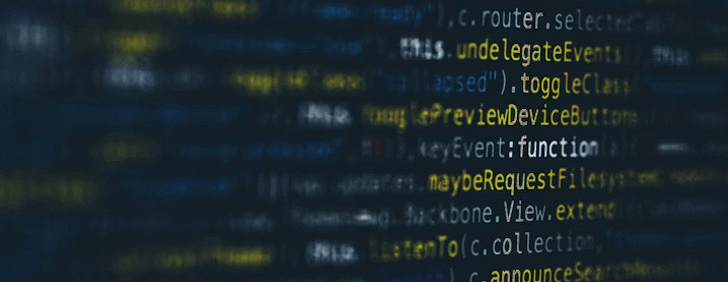
The questioning is relentless
and exhausting —
but it must be done.And to be fair,
Casey’s modernisation
is going well in places:
cautionary tales of AI,
the sharing of key protective information —
health…
Casey’s consultation is long and arduous, but absolutely necessary. There are some things it is getting right.
Responding to the consultation in good faith requires reading every clause closely, anticipating consequences for children, and challenging framings that could create safeguarding risks — all of which is deeply draining, particularly for those whose identities or areas of expertise are implicated in the guidance itself. Yet the necessity is the point. Because KCSIE shapes statutory safeguarding practice, disengagement would effectively surrender the terrain to poorer interpretations. The exhaustion is not a sign the process is wrong — it is evidence of how high the stakes are.
The proposed changes acknowledge AI as a safeguarding issue, referencing generative AI, deepfakes, and staff training rather than treating technology as neutral or external. This is at least a helpful start which is an important shift for a statutory document that often lags behind lived reality in schools.
There will be continued emphasis on information sharing and continuity of safeguarding records, particularly around vulnerability, mental health, and transitions. “Data protection does not prevent sharing” remains intact, which is a vital safeguard against risk-averse withholding of information that can leave children unsupported at critical moments.
With regards to mental heath, schools are guided to identify concerns early, support appropriately, and escalate when necessary, without being turned into proxy clinicians. This reinforces safeguarding as a collective, preventative responsibility rather than an impossible medical one.

But Casey cannot see
the elephant in the room.
Does not even acknowledge it —flapping its giant ears,
scraping a forehoof,
preparing to charge.Casey cannot see
that it is already charging.And safeguarding, Casey reminds us,
is about foreseeable harm —
even when it is an inconvenient truth to name.
Climate harm is already causing foreseeable safeguarding risk to children, and Casey still does not acknowledge it.
If you didn’t catch it, then my deliberate use of the phase ‘an inconvenient truth’ is a play on the 2006 Al Gore documentary film. The ‘elephant in the room’ is the climate crisis. Climate change is vast, visible, and already shaping children’s lives and vulnerabilities, yet it remains unnamed. Not once is climate change referenced in the proposed KCSIE changes, let alone recognised as a safeguarding issue in its own right. There is no section, no framework, no acknowledgement that climate‑driven disruption, anxiety, displacement, heat, food insecurity, or environmental collapse constitute foreseeable harm to children.
And safeguarding, we are repeatedly told, is about foreseeable harm — even when it is uncomfortable, politically awkward, or inconvenient to name. The silence is not neutral. When the most predictable, systemic harm to children’s futures is excluded from statutory guidance, it is not because it is invisible, but because it demands a reckoning that safeguarding policy appears not yet willing to face.

And this is where Casey needs our help.
Because the fog is not empty.
It is filled with heat.
With smoke.
With floodwater.
With shortages, displacement,
and children carrying anxieties
they did not choose.Casey looks for threat
in individuals,
in homes,
in isolated moments —
but harm does not always arrive that way.It can build slowly.
Often it is systemic.
Sometimes forecast years in advance,
modelled, mapped,
and still allowed to gather speed.Children know this.
They absorb it from headlines,
from heatwaves,
from classrooms that feel unprepared
to speak plainly.Teachers see it too —
in behaviour,
in attendance,
in fear for futures
that no longer feel abstract.This is not politics.
This is pattern recognition.Climate change does not sit
outside safeguarding —
it intensifies
every vulnerability Casey already names.Poverty.
Health.
Crisis.
Exploitation.
Absence.
Distress.The elephant is not theoretical.
It tramples the ground
Casey already patrols.
Casey needs our responses to the consultation to ensure climate change is written into safeguarding policy. Every vulnerability Casey already names are exacerabated or intensifed by climate change.
When we respond to the consultation, we must not treat its silence on climate as neutral or benign. Safeguarding practice already recognises cumulative risk, compounding stressors, and contextual vulnerability. Climate harm belongs squarely in that category, whether or not the document acknowledges it. Many educators already see these pressures in school.
Respond by grounding your evidence in observed professional reality:
- Heat disrupting learning and behaviour
- Emergency closures and responses (to e.g. flooding), poor air quality, infrastructure strain
- Families and pupils experiencing instability after environmental events, including mental health issues
KCSIE repeatedly asks respondents to comment on whether guidance reflects real-world safeguarding pressures. Climate impacts are now part of that reality. Explicitly say so. Educators are also within their safeguarding remit when they can highlight
- Eco‑anxiety and future‑related distress presenting as behaviour, withdrawal, or disengagement
- Food insecurity, housing instability, and resource scarcity intensified by climate disruption
- Young people expressing fear and moral distress about a future they feel unprotected from
These can be framed as foreseeable harm, not speculative concern. In responses, educators should challenge the implicit narrowing of safeguarding to interpersonal risk alone. KCSIE already recognises contextual safeguarding, cumulative harm, and systems‑level vulnerability. Climate change fits these frameworks but is absent. Responders can ask directly:
- Where is guidance on structural risk?
- Where is support for schools responding to slow‑onset, system‑wide harm?
- Why is the largest foreseeable source of future vulnerability omitted?
There are also opportunities to reflect KCSIE’s own language back to it. Safeguarding does not wait for crisis. It acts on trends, escalation, and aggregation. Climate risk has been forecast, modelled, and mapped — including in national security and public health assessments — for years. Point out the inconsistency that AI risk is named, mental health is named but climate risk is absent. Ask why.
Children know this. This should be said explicitly in responses. Young people are not shielded from climate reality. They encounter it through:
- News and social media
- Heatwaves and extreme weather
- A curriculum that too often avoids naming what is happening usually by only teaching ‘the science’
Safeguarding guidance that fails to acknowledge this gap leaves staff unsupported in responding honestly and proportionately.

So we must ask Casey to look again.
To widen the lens.
To recognise that reasonable professional care
includes climate literacy,
because foreseeable harm
demands foreseeable preparation.We ask not for ideology,
but coherence.
Not for slogans,
but safeguarding that keeps pace
with the world children are growing up in.Casey advises thousands.
Across the country.
And those thousands —
that’s us.So we respond.
We consult.
We can help Casey see.Because safeguarding has never been
only about reacting —
it has always been
about noticing
what is already charging.
– “Casey Cannot See” (c) Kit Marie Rackley, April 2026
Climate literate safeguarding is completely in-line with a policy of foreseeability and context.
It is clear that staff are already doing safeguarding work in this space:
- Managing distress that has no single “incident”
- Supporting pupils whose fear for the future affects attendance and engagement
- Navigating questions their training never explicitly prepared them to answer
It should be said that current guidance implicitly relies on staff professional judgement, but offers no recognition or framework. Consultation response can say plainly that recognising climate change as a safeguarding issue is not political advocacy; it is the identification of a well‑evidenced pattern of foreseeable harm affecting children’s welfare. Safeguarding policy already does this for exploitation, violence, mental health, and online harms. Climate change intensifies each of these. Responders ccan make the link explicit in safeguarding terms:
- Poverty → worsened by climate impacts
- Health → heat, air quality, stress
- Crisis → environmental emergencies and extreme weather events (heatwaves, flooding)
- Exploitation → increased vulnerability under stress
- Absence → displacement, disruption
- Distress → chronic anxiety, loss of agency
The consultation is an opportunity to join the dots it the proposal already half‑draws. The consultation is an opportunity to ask for:
- Explicit recognition of climate change as a safeguarding context
- Guidance on climate‑related distress and cumulative risk
- Alignment between safeguarding policy and national risk assessments
- Support for staff to address climate reality honestly and safely
All of this can be framed as reasonable professional responsibility — not additional burden. At the end of the consultation, the DfE can be reminded that schools are already on this terrain. The question is not whether climate change affects safeguarding — but whether statutory guidance will continue to pretend it doesn’t. If safeguarding is about foreseeable harm, then refusing to name the climate crisis is not caution. It is omission.

Conclusion: helping Casey see
Safeguarding has never been about predicting the future with certainty. It has always been about acting responsibly in the face of credible, accumulating evidence. It is about noticing patterns early, responding proportionately, and refusing to ignore foreseeable harm simply because it is complex, systemic, or uncomfortable to address.
Climate change meets every safeguarding test KCSIE already applies elsewhere. It is foreseeable. It is already affecting children’s health, behaviour, attendance, wellbeing, and sense of safety. It intensifies poverty, crisis, exploitation, and distress — the very vulnerabilities the guidance names repeatedly — yet it remains absent from the statutory framework tasked with protecting children.
This consultation gives educators a rare opportunity to say so, collectively and professionally.
Responding does not require new ideology, additional burden, or specialist expertise beyond what schools are already exercising every day. It requires coherence: that safeguarding guidance reflects the conditions children are actually growing up in, and that staff are trusted, supported, and equipped to respond honestly and proportionately to those conditions.
If KCSIE is to remain credible as a safeguarding document, it cannot continue to treat the climate crisis as someone else’s problem. The elephant is already on the terrain. Children see it. Teachers feel its effects. Schools are responding regardless of whether policy acknowledges it.
Helping ‘Casey’ see is not about rewriting safeguarding from scratch. It is about widening the lens just enough to bring reality into view — and ensuring that foreseeability means what it says it means.
Safeguarding has never been only about reacting.
It has always been about noticing what is already charging.
Now is the moment to say that plainly. After all, it’s our safeguarding duty to do so.
RESPOND TO THE CONSULTATION HERE
Image credits:
- Casey is important…: Concrete ramp – Hyewon Hwang (via Unsplash)
- Casy is big on context…: Foggy road in Craggy Gardens, United States – Wes Hicks (via Unsplash)
- The questioning is relentless…: Digital code – Markus Spiske (via Unsplash)
- But Casey cannot see the elephant in the room…: Elephant grazing at sunset – Geranimo (via Unsplash)
- And this is where Casey needs our help…: Empty classroom with desks and chairs by windows – Allen Y (via Unsplash)
- So we must ask Casey to look again…: Spaceship Earth: NASA astronaut and Artemis II mission specialist Christina Koch peers out of one of the Orion spacecraft’s main cabin windows, looking back at Earth, as the crew travels towards the Moon – NASA
- Photos of GAConf26 TeachMeet performance: Alistair Hamill
I am totally committed to the fight of protecting our children, their education and their future in the face of climate change. Most of this work is done in my own time with my own funds. If you are seeing this message, it is because this blog post / resource is one example of that. If you found it useful and beneficial, please consider giving me your support with a donation below. Thank you!
Make a one-time donation
Make a monthly donation
Make a yearly donation
Choose an amount
Or enter a custom amount
Your contribution is appreciated.
Your contribution is appreciated.
Your contribution is appreciated.

 Geogramblings