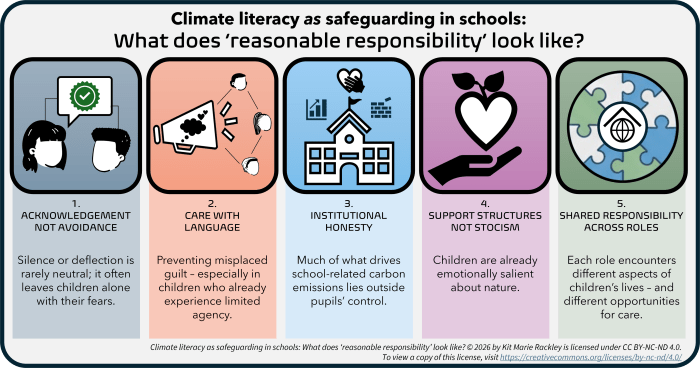
The final part of the "This isn't activism, it's duty of care". Here I propose five 'reasonable responsibilties' of educators regarding climate change and its impact on children. By combining the three reports explored, we recognise children's emotional connections to nature, school systems' contributions to environmental issues, and officially recognised ecological risks. Rather than advocating for heroic actions, I call for acknowledgment of climate-related concerns, careful language, and institutional honesty. The aim is to cultivate climate literacy without placing undue burden on students, grounding responsibilities in shared, reasonable actions rather than individual blame.
Tag: carbon emissions
Schools are not neutral: What school carbon data reveals about responsibility, modelling, and care
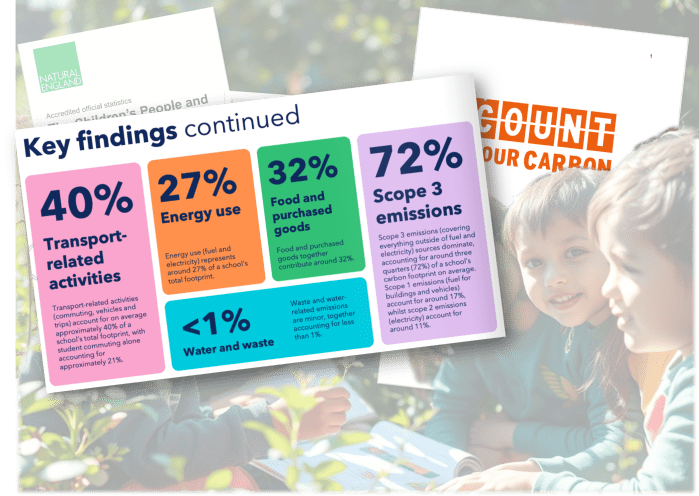
Part 3 of the "This Isn't Activism: It's a Duty of Care" series discusses the findings of the Count Your Carbon 2026 report, which analyses carbon emissions from over 1,600 schools in England. It reveals that structural decisions, such as transportation and food sourcing, significantly contribute to school emissions, often beyond childrenโs control. I emphasise that framing climate responsibility on students is misleading and may lead to emotional burdens, and so there is a need for institutional honesty and alignment of actions with the realities of carbon impact to support safeguarding rather than shifting blame onto young people.
This isnโt activism, itโs duty of care: What three recent reports tell us about climate change, young people, and responsibility in education
The start of a series of blog posts focusing on climate literacy and institutional responsibility, examining the complex issues children face. By analysing recent reports, the series aims to slow down the conversation and emphasise professional duties toward young people's wellbeing. It will challenge existing narratives and explore safeguarding implications.