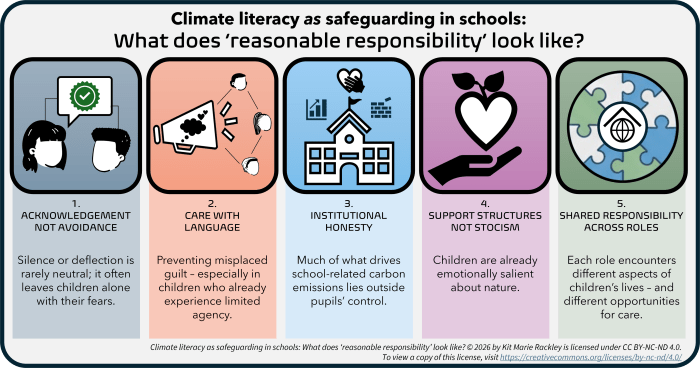
Infographic titled "Climate literacy as safeguarding in schools" with five sections: Acknowledgement, Care, Honesty, Support, Shared Responsibility. Each section has an icon and brief explanatory text, emphasizing emotional and educational roles in addressing climate change.

Climate literacy as safeguarding: What reasonable professional responsibility looks like

The final part of the "This isn't activism, it's duty of care". Here I propose five 'reasonable responsibilties' of educators regarding climate change and its impact on children. By combining the three reports explored, we recognise children's emotional connections to nature, school systems' contributions to environmental issues, and officially recognised ecological risks. Rather than advocating for heroic actions, I call for acknowledgment of climate-related concerns, careful language, and institutional honesty. The aim is to cultivate climate literacy without placing undue burden on students, grounding responsibilities in shared, reasonable actions rather than individual blame.
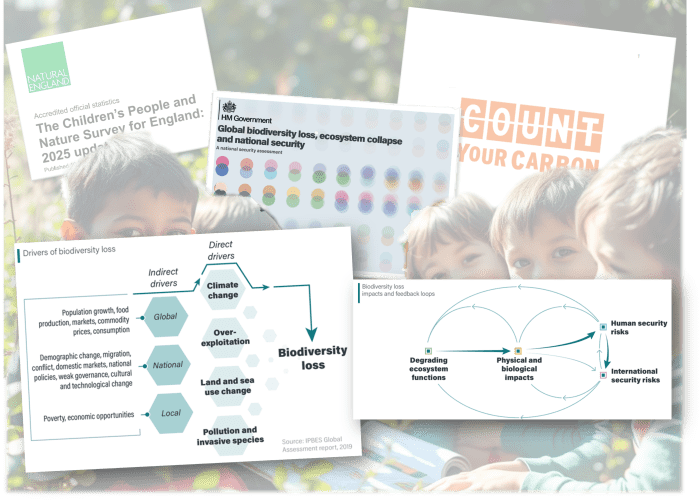
When ecological risk becomes a planning assumption: reading the National Security Assessment with care

Part 4 of the "This isnโ€™t activism, itโ€™s duty of care" series. Recent reports highlight the intersection of climate change, education, and responsibility, specifically the UK government's National Security Assessment on biodiversity loss. This internal document emphasises foreseeable risks to food, water, health, and economic stability. It calls for awareness and preparation rather than prescriptive measures, advocating for ecological risk acknowledgment in education. Thus, climate literacy should focus on safeguarding rather than activism, fostering resilience and understanding amid uncertainty.

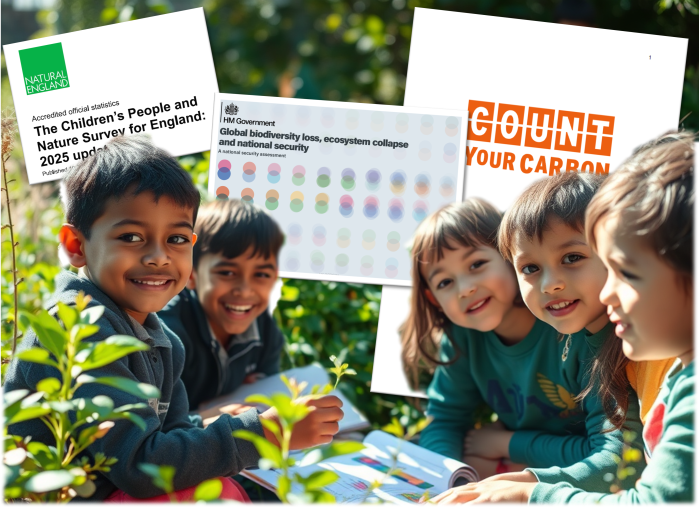
This isnโ€™t activism, itโ€™s duty of care: What three recent reports tell us about climate change, young people, and responsibility in education

The start of a series of blog posts focusing on climate literacy and institutional responsibility, examining the complex issues children face. By analysing recent reports, the series aims to slow down the conversation and emphasise professional duties toward young people's wellbeing. It will challenge existing narratives and explore safeguarding implications.