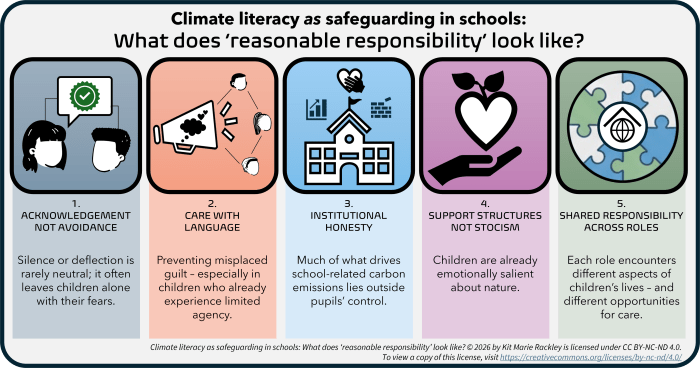
The final part of the "This isn't activism, it's duty of care". Here I propose five 'reasonable responsibilties' of educators regarding climate change and its impact on children. By combining the three reports explored, we recognise children's emotional connections to nature, school systems' contributions to environmental issues, and officially recognised ecological risks. Rather than advocating for heroic actions, I call for acknowledgment of climate-related concerns, careful language, and institutional honesty. The aim is to cultivate climate literacy without placing undue burden on students, grounding responsibilities in shared, reasonable actions rather than individual blame.
Tag: climate literacy
Curriculum Reform, Climate Literacy & Safeguarding: Decolonising What We Teach (and Why) in Light of the DfE Review
The Department for Education's Curriculum and Assessment Review outlines potential educational reforms by 2028. While improvements are noted, significant gaps remain in curriculum time and assessment for climate education. Action steps for school leaders to mitigate shortfalls include embedding climate education into policies, assessing decolonial practices, and enhancing teacher training. A free subscription is required to read this post.
Drake Primary School’s Climate Journey: A Success Story
Drake Primary shows how climate action and safeguarding can work hand-in-hand. From energy audits to outdoor learning and eco-anxiety support, their journey proves sustainability isnโt an add-onโitโs a mindset. Hereโs what schools can learn from their whole-school approach.
