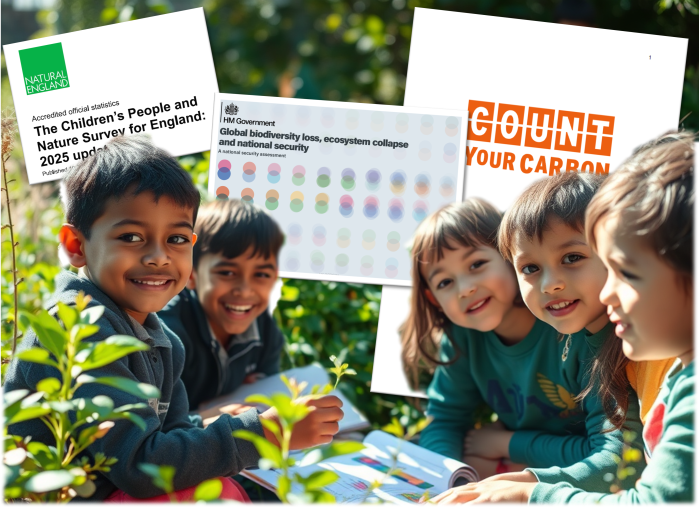
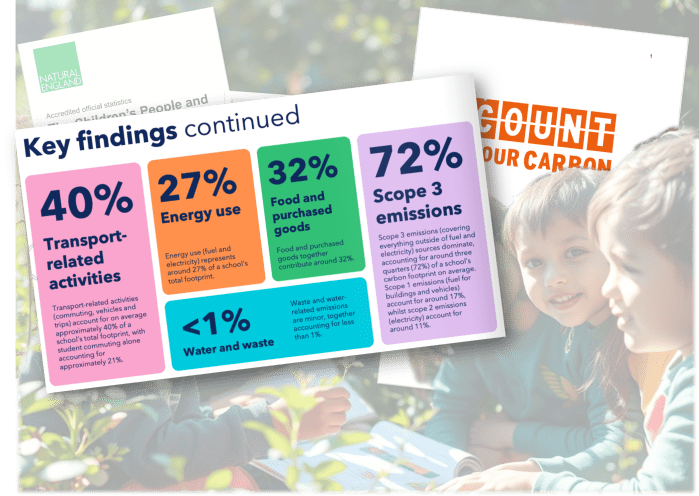
Part 3 of the "This Isn't Activism: It's a Duty of Care" series discusses the findings of the Count Your Carbon 2026 report, which analyses carbon emissions from over 1,600 schools in England. It reveals that structural decisions, such as transportation and food sourcing, significantly contribute to school emissions, often beyond childrenโs control. I emphasise that framing climate responsibility on students is misleading and may lead to emotional burdens, and so there is a need for institutional honesty and alignment of actions with the realities of carbon impact to support safeguarding rather than shifting blame onto young people.
Tag: sustainability
Children already know this matters: What Natural England’s Survey tells us about wellbeing, inequality, and care
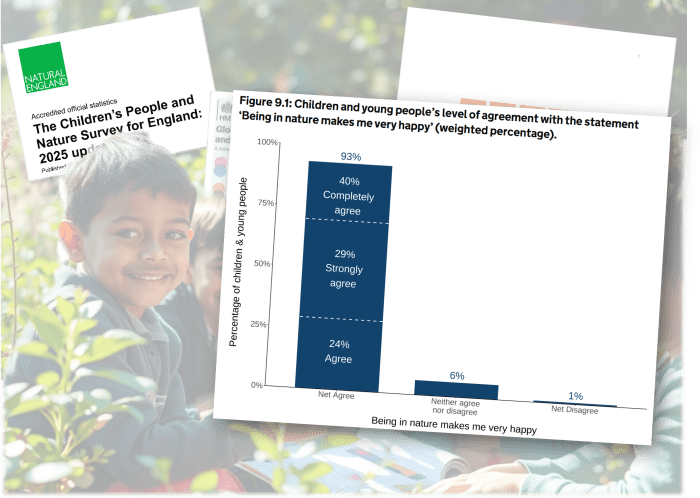
Part 2 of the "This Isn't Activism: It's a Duty of Care" series on climate education. I look at the importance of understanding children's experiences and relationships with nature as revealed in the Childrenโs People and Nature Survey for England, highlighting that most children feel happy in nature, but access to it is uneven, influenced by factors like income and ethnicity. Safeguarding frameworks need to account for these inequalities, as childrenโs emotional connections to nature exist before climate-related concerns. Educators should approach these topics with care, awareness, and honesty rather than avoidance or panic.
This isnโt activism, itโs duty of care: What three recent reports tell us about climate change, young people, and responsibility in education
The start of a series of blog posts focusing on climate literacy and institutional responsibility, examining the complex issues children face. By analysing recent reports, the series aims to slow down the conversation and emphasise professional duties toward young people's wellbeing. It will challenge existing narratives and explore safeguarding implications.
Curriculum Reform, Climate Literacy & Safeguarding: Decolonising What We Teach (and Why) in Light of the DfE Review
The Department for Education's Curriculum and Assessment Review outlines potential educational reforms by 2028. While improvements are noted, significant gaps remain in curriculum time and assessment for climate education. Action steps for school leaders to mitigate shortfalls include embedding climate education into policies, assessing decolonial practices, and enhancing teacher training. A free subscription is required to read this post.
Drake Primary School’s Climate Journey: A Success Story
Drake Primary shows how climate action and safeguarding can work hand-in-hand. From energy audits to outdoor learning and eco-anxiety support, their journey proves sustainability isnโt an add-onโitโs a mindset. Hereโs what schools can learn from their whole-school approach.
Beyond the Chalkface: Geography Teachers as Leaders in the Climate Crisis Era
The climate crisis is a safeguarding issue. Geography teachers are on the front line. My new chapter in 'What is Geography Teaching, Now?' is out now. I explore how we can move beyond teaching dire facts to become storytellers and enablers for a generation facing eco-anxiety. Discover the simple language shift that empowers students and explore my free interactive framework for building climate literacy.
โWeโve Spent Our Wagesโ: Reflections on the UKโs Earth Overshoot Day 2025
Today, 20th May 2025, marks the UKโsย Earth Overshoot Dayโthe date when, if everyone on the planet lived like the average person in the UK, we would have used up our share of the Earthโs renewable resources for the entire year. From this point forward, weโre living in ecological debt. In our latestย Espresso & Geographyย podcast short, I was joined by the Dave Wynn to unpack what Overshoot Day means, why it matters, and how we can use it as a powerful communication tool for sustainability.
Defending Climate Literacy: A Response to NOAA’s Guide Removal
In my latest #GeogramblingsReacts video, I delve into the troubling removal of NOAA's Essential Principles for Climate Literacy guide by the current administration. This invaluable resource has been a cornerstone for climate education, and its censorship is a significant blow to our efforts. Discover why this guide matters, how you can still access it, and join me in supporting climate literacy.
Understanding Climate Change: Resources for Education (2025 Update)
Climate science and related disciplines (like social and economic science on climate change impacts and solutions) is constantly envolving. Back in 2020, I was comissioned by the Geographical Association to produced some member-access resources, with some minor updates for 2022. A lot happens in just three years when it comes to the issue of climate change, and while those GA resources are still relevant and useful, recently commissioned work has compelled me to update some of those resources and create some new ones.
Empowering Schools: Linking Climate Action to Safeguarding
I have long demonstrated that climate change should be included in school safeguarding policies, as it impacts children's well-being and education. As the East of England's Regional Hub Manager for the Climate Ambassadors scheme, I have began to assist schools in making safeguarding policies climate literate. Recent work with the Halcyon Federation focused on integrating climate action into safeguarding measures. Read how we got there.