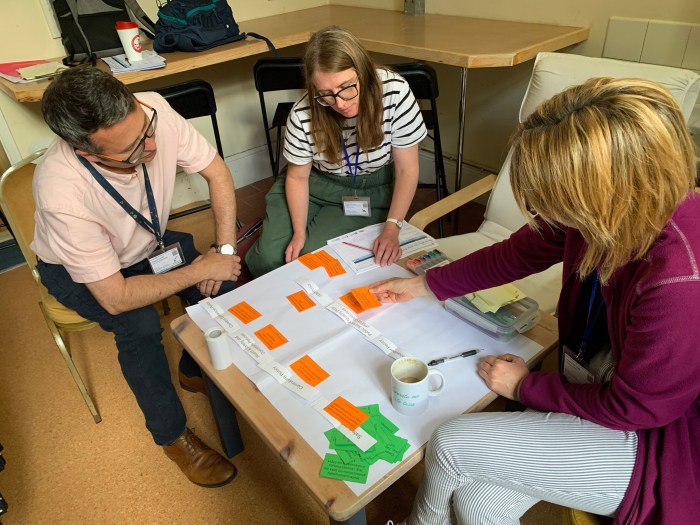
The toolkit 'Linking education setting statutory documents and approaches to Climate Action Plans' enables schools to integrate Climate Action Plans with statutory policies effectively. It offers activities, checklists, and templates to embed sustainability into school operations, enhancing accountability and facilitating compliance with Department for Education requirements.
Author: Kit Marie Rackley (they/she)
Annual International Gender Survey Opens For Twelfth Year Running
The Gender Census is an annual online survey aimed at collecting data on gender language preferences. Launched in 2013, it gathers responses globally, providing valuable data that supports academia, activism, and businesses. The 2024 survey gathered over 48,000 responses. This initiative, led by Cassian Lodge, encourages respectful gender language usage and fosters community among gender-divergent individuals. A fantastic initiative that demonstrates the beautful intersectionality between human geography and queerness.
Climate Change Visualised: Warming Stripes Explained
Climate change isn’t abstract. It’s a silent shout in blue and red. The stripes don’t lie: we’re running hot. Lighten the shade. #ShowYourStripesDay #CoffeeGeogPod 🌍 Your stripe matters.
“We’ve Spent Our Wages”: Reflections on the UK’s Earth Overshoot Day 2025
Today, 20th May 2025, marks the UK’s Earth Overshoot Day—the date when, if everyone on the planet lived like the average person in the UK, we would have used up our share of the Earth’s renewable resources for the entire year. From this point forward, we’re living in ecological debt. In our latest Espresso & Geography podcast short, I was joined by the Dave Wynn to unpack what Overshoot Day means, why it matters, and how we can use it as a powerful communication tool for sustainability.
Defending Climate Literacy: A Response to NOAA’s Guide Removal
In my latest #GeogramblingsReacts video, I delve into the troubling removal of NOAA's Essential Principles for Climate Literacy guide by the current administration. This invaluable resource has been a cornerstone for climate education, and its censorship is a significant blow to our efforts. Discover why this guide matters, how you can still access it, and join me in supporting climate literacy.
Understanding Climate Change: Resources for Education (2025 Update)
Climate science and related disciplines (like social and economic science on climate change impacts and solutions) is constantly envolving. Back in 2020, I was comissioned by the Geographical Association to produced some member-access resources, with some minor updates for 2022. A lot happens in just three years when it comes to the issue of climate change, and while those GA resources are still relevant and useful, recently commissioned work has compelled me to update some of those resources and create some new ones.
How to Use Carbon Brief’s Attribution Interactive Part 2 – Case Studies of Extreme Weather Events
This mini-series offers teaching ideas for using Carbon Brief's Extreme Weather Attribution Interactive Map. This post contains a set of resources giving guidance for researching and writing about selected case studies.
How to Use Carbon Brief’s Attribution Interactive Part 1 – How Climate Change is Impacting Extreme Event Trends
This mini-series offers teaching ideas for using Carbon Brief's Extreme Weather Attribution Interactive Map, focusing on climate change's effects on extreme weather. Part 1 is a resource to guide learners through analysing data trends in extreme events like heat, storms, and droughts using spreadsheet apps like Google Sheets.
Empowering Schools: Linking Climate Action to Safeguarding
I have long demonstrated that climate change should be included in school safeguarding policies, as it impacts children's well-being and education. As the East of England's Regional Hub Manager for the Climate Ambassadors scheme, I have began to assist schools in making safeguarding policies climate literate. Recent work with the Halcyon Federation focused on integrating climate action into safeguarding measures. Read how we got there.
Teachers: Yes, you can leave ‘X’ and not lose (mostly) everything you’ve collated. Here’s how.
A couple of weeks ago I gave my reasons for leaving 'X' (Twitter), despite the fact that I have cultivated so many useful teaching tid-bits, useful links and resources and insights from colleagues. For me, staying on that platform is akin to continue banking with a finance insitution that invests my money into weapons of war or fossil fuel endeavours... but I can understand way folks might stay put due to the lack of choice or losing access to such a resource bank. However, you can have your cake and eat it... well, mostly. You'll be able to jump-ship and still retain most of what you had.